Operational database management systems (also referred to as OLTP databases or online transaction processing databases), are used to update data in real-time. These types of databases allow users to do more than simply view archived data. Operational databases allow you to modify that data (add, change or delete data), doing it in real-time. OLTP databases provide transactions as main abstraction to guarantee data consistency that guarantee the so-called ACID properties. Basically, the consistency of the data is guaranteed in the case of failures and/or concurrent access to the data. == History == Since the early 1990s, the operational database software market has been largely taken over by SQL engines. In 2014, the operational DBMS market (formerly OLTP) was evolving dramatically, with new, innovative entrants and incumbents supporting the growing use of unstructured data and NoSQL DBMS engines, as well as XML databases and NewSQL databases. NoSQL databases typically have focused on scalability and have renounced to data consistency by not providing transactions as OLTP system do. Operational databases are increasingly supporting distributed database architecture that can leverage distribution to provide high availability and fault tolerance through replication and scale out ability. The growing role of operational databases in the IT industry is moving fast from legacy databases to real-time operational databases capable to handle distributed web and mobile demand and to address Big data challenges. Recognizing this, Gartner started to publish the Magic Quadrant for Operational Database Management Systems in October 2013. == List of operational databases == Notable operational databases include: == Use in business == Operational databases are used to store, manage and track real-time business information. For example, a company might have an operational database used to track warehouse/stock quantities. As customers order products from an online web store, an operational database can be used to keep track of how many items have been sold and when the company will need to reorder stock. An operational database stores information about the activities of an organization, for example customer relationship management transactions or financial operations, in a computer database. Operational databases allow a business to enter, gather, and retrieve large quantities of specific information, such as company legal data, financial data, call data records, personal employee information, sales data, customer data, data on assets and many other information. An important feature of storing information in an operational database is the ability to share information across the company and over the Internet. Operational databases can be used to manage mission-critical business data, to monitor activities, to audit suspicious transactions, or to review the history of dealings with a particular customer. They can also be part of the actual process of making and fulfilling a purchase, for example in e-commerce. == Data warehouse terminology == In data warehousing, the term is even more specific: the operational database is the one which is accessed by an operational system (for example a customer-facing website or the application used by the customer service department) to carry out regular operations of an organization. Operational databases usually use an online transaction processing database which is optimized for faster transaction processing (create, read, update and delete operations). An operational database is the source for a data warehouse. Data from an operational database can be loaded into an operational data store at a data warehouse before the data is processed into the data warehouse.
Continuous Exposure Management
Continuous Exposure Management (CEM) is a cybersecurity approach that provides continuous, real-time monitoring, assessment, and prioritization of an organization’s security vulnerabilities and exposures. CEM focuses on identifying and mitigating risks by analyzing attack paths and providing recommendations, ensuring organizations maintain a resilient cybersecurity posture. == Overview == CEM platforms enable organizations to detect and remediate cybersecurity exposures, such as vulnerabilities, misconfigurations and weak credentials, across their entire ecosystem, including on-premises, cloud environments, and hybrid infrastructures. By simulating potential attack scenarios and mapping attack paths, these platforms help organizations understand how exposures could be exploited and which ones pose the greatest risk to critical assets. The XM Cyber Continuous Exposure Management platform, for example, integrates automated attack path mapping and contextual risk analysis, allowing security teams to prioritize remediation efforts effectively. In 2023, the platform uncovered over 40 million exposures affecting 11.5 million critical business entities. As cyber threats evolve, CEM platforms are becoming indispensable for modern enterprises. According to Gartner, organizations implementing continuous exposure management are three times less likely to experience a breach by 2026. In addition to risk mapping and simulation, some CEM approaches incorporate automated security validation to verify the exploitability of identified vulnerabilities. Platforms such as Pentera utilize automated security testing to emulate real-world adversary behavior across the network, identifying how security gaps could be leveraged to gain access to critical assets. This process aims to move beyond theoretical risk assessments by providing empirical evidence of exposure, allowing security teams to focus remediation efforts on validated attack vectors. By integrating this validation phase into the broader exposure management lifecycle, organizations can refine their prioritization strategies based on the actual effectiveness of their existing security controls and the proven reachability of their most sensitive data. == Key features == CEM platforms are designed to address the dynamic nature of cybersecurity risks through the following features: Attack Path Simulation: Continuously maps attack paths to critical assets, highlighting exploitable exposures and chokepoints. Risk Prioritization: Focuses on exposures with the highest impact on critical assets, ensuring efficient allocation of resources. Remediation Guidance: Provides clear, actionable recommendations to resolve exposures and strengthen defenses. Integration with Existing Tools: Seamlessly works with Security Information and Event Management (SIEM), ticketing, and Security Orchestration, Automation, and Response (SOAR) systems. Real-time Monitoring: Offers continuous visibility into exposures, ensuring that new ones are quickly identified and addressed.
Symbolic artificial intelligence
In artificial intelligence, symbolic artificial intelligence (also known as classical artificial intelligence or logic-based artificial intelligence) is the term for the collection of all methods in artificial intelligence research that are based on high-level symbolic (human-readable) representations of problems, logic, and search. Symbolic AI used tools such as logic programming, production rules, semantic nets and frames, and it developed applications such as knowledge-based systems (in particular, expert systems), symbolic mathematics, automated theorem provers, ontologies, the semantic web, and automated planning and scheduling systems. The Symbolic AI paradigm led to important ideas in search, symbolic programming languages, agents, multi-agent systems, the semantic web, and the strengths and limitations of formal knowledge and reasoning systems. Symbolic AI was the dominant paradigm of AI research from the mid-1950s until the mid-1990s. Researchers in the 1960s and the 1970s were convinced that symbolic approaches would eventually succeed in creating a machine with artificial general intelligence and considered this the ultimate goal of their field. An early boom, with early successes such as the Logic Theorist and Samuel's Checkers Playing Program, led to unrealistic expectations and promises and was followed by the first AI Winter as funding dried up. A second boom (1969–1986) occurred with the rise of expert systems, their promise of capturing corporate expertise, and an enthusiastic corporate embrace. That boom, and some early successes, e.g., with XCON at DEC, was followed again by later disappointment. Problems with difficulties in knowledge acquisition, maintaining large knowledge bases, and brittleness in handling out-of-domain problems arose. Another, second, AI Winter (1988–2011) followed. Subsequently, AI researchers focused on addressing underlying problems in handling uncertainty and in knowledge acquisition. Uncertainty was addressed with formal methods such as hidden Markov models, Bayesian reasoning, and statistical relational learning. Symbolic machine learning addressed the knowledge acquisition problem with contributions including Version Space, Valiant's PAC learning, Quinlan's ID3 decision-tree learning, case-based learning, and inductive logic programming to learn relations. Neural networks, a subsymbolic approach, had been pursued from early days and reemerged strongly in 2012. Early examples are Rosenblatt's perceptron learning work, the backpropagation work of Rumelhart, Hinton and Williams, and work in convolutional neural networks by LeCun et al. in 1989. However, neural networks were not viewed as successful until about 2012: "Until Big Data became commonplace, the general consensus in the Al community was that the so-called neural-network approach was hopeless. Systems just didn't work that well, compared to other methods. ... A revolution came in 2012, when a number of people, including a team of researchers working with Hinton, worked out a way to use the power of GPUs to enormously increase the power of neural networks." Over the next several years, deep learning had spectacular success in handling vision, speech recognition, speech synthesis, image generation, and machine translation, though symbolic approaches continue to be useful in a few domains such as computer algebra systems and proof assistants. == History == A short history of symbolic AI to the present day follows below. Time periods and titles are drawn from Henry Kautz's 2020 AAAI Robert S. Engelmore Memorial Lecture and the longer Wikipedia article on the History of AI, with dates and titles differing slightly for increased clarity. === The first AI summer: irrational exuberance, 1948–1966 === Success at early attempts in AI occurred in three main areas: artificial neural networks, knowledge representation, and heuristic search, contributing to high expectations. This section summarizes Kautz's reprise of early AI history. ==== Approaches inspired by human or animal cognition or behavior ==== Cybernetic approaches attempted to replicate the feedback loops between animals and their environments. A robotic turtle, with sensors, motors for driving and steering, and seven vacuum tubes for control, based on a preprogrammed neural net, was built as early as 1948. This work can be seen as an early precursor to later work in neural networks, reinforcement learning, and situated robotics. An important early symbolic AI program was the Logic theorist, written by Allen Newell, Herbert Simon and Cliff Shaw in 1955–56, as it was able to prove 38 elementary theorems from Whitehead and Russell's Principia Mathematica. Newell, Simon, and Shaw later generalized this work to create a domain-independent problem solver, GPS (General Problem Solver). GPS solved problems represented with formal operators via state-space search using means-ends analysis. During the 1960s, symbolic approaches achieved great success at simulating intelligent behavior in structured environments such as game-playing, symbolic mathematics, and theorem-proving. AI research was concentrated in four institutions in the 1960s: Carnegie Mellon University, Stanford, MIT and (later) University of Edinburgh. Each one developed its own style of research. Earlier approaches based on cybernetics or artificial neural networks were abandoned or pushed into the background. Herbert Simon and Allen Newell studied human problem-solving skills and attempted to formalize them, and their work laid the foundations of the field of artificial intelligence, as well as cognitive science, operations research and management science. Their research team used the results of psychological experiments to develop programs that simulated the techniques that people used to solve problems. This tradition, centered at Carnegie Mellon University would eventually culminate in the development of the Soar architecture in the middle 1980s. ==== Heuristic search ==== In addition to the highly specialized domain-specific kinds of knowledge that we will see later used in expert systems, early symbolic AI researchers discovered another more general application of knowledge. These were called heuristics, rules of thumb that guide a search in promising directions: "How can non-enumerative search be practical when the underlying problem is exponentially hard? The approach advocated by Simon and Newell is to employ heuristics: fast algorithms that may fail on some inputs or output suboptimal solutions." Another important advance was to find a way to apply these heuristics that guarantees a solution will be found, if there is one, not withstanding the occasional fallibility of heuristics: "The A algorithm provided a general frame for complete and optimal heuristically guided search. A is used as a subroutine within practically every AI algorithm today but is still no magic bullet; its guarantee of completeness is bought at the cost of worst-case exponential time. ==== Early work on knowledge representation and reasoning ==== Early work covered both applications of formal reasoning emphasizing first-order logic, along with attempts to handle common-sense reasoning in a less formal manner. ===== Modeling formal reasoning with logic: the "neats" ===== Unlike Simon and Newell, John McCarthy felt that machines did not need to simulate the exact mechanisms of human thought, but could instead try to find the essence of abstract reasoning and problem-solving with logic, regardless of whether people used the same algorithms. His laboratory at Stanford (SAIL) focused on using formal logic to solve a wide variety of problems, including knowledge representation, planning and learning. Logic was also the focus of the work at the University of Edinburgh and elsewhere in Europe which led to the development of the programming language Prolog and the science of logic programming. ===== Modeling implicit common-sense knowledge with frames and scripts: the "scruffies" ===== Researchers at MIT (such as Marvin Minsky and Seymour Papert) found that solving difficult problems in vision and natural language processing required ad hoc solutions—they argued that no simple and general principle (like logic) would capture all the aspects of intelligent behavior. Roger Schank described their "anti-logic" approaches as "scruffy" (as opposed to the "neat" paradigms at CMU and Stanford). Commonsense knowledge bases (such as Doug Lenat's Cyc) are an example of "scruffy" AI, since they must be built by hand, one complicated concept at a time. === The first AI winter: crushed dreams, 1967–1977 === The first AI winter was a shock: During the first AI summer, many people thought that machine intelligence could be achieved in just a few years. The Defense Advance Research Projects Agency (DARPA) launched programs to support AI research to use AI to solve problems of national security; in particular, to automate the translation of Russian to English for inte
Human-centered AI
Human-centered AI is the initiative at the intersection of the fields of artificial intelligence (AI) and human-computer interaction (HCI) to develop AI systems in a way that prioritizes human values, needs, and general flourishing. Emphasis is placed on the recognition that artificial intelligence systems are rapidly changing, and will continue to influence, many aspects of the human experience, in areas ranging from scientific inquiry, governance and policy, labor and the economy, and creative expression, with an aim set to adapt current developments and guide future developments on a trajectory which is most beneficial to the human population at large, with the goal of augmenting human intelligence and capacities across these areas, as opposed to replacing them. Particular attention is paid to mitigating negative effects of AI automation on the livelihoods of the labor force, the use of AI in healthcare fields, and imbuing AI systems with societal values. Human-centered AI is linked to related endeavors in AI alignment and AI safety, but while these fields primarily focus on mitigating risks posed by AI that is unaligned to human values and/or uncontrollable AI self-development, human-centered AI places significant focus in exploring how AI systems can augment human capacities and serve as collaborators. == Conceptual history == The importance of the alignment of artificial intelligence development towards human values in some sense predates artificial intelligence itself, as before the modern conception of artificial intelligence as coined at the 1956 Dartmouth Workshop, the conception of robots as constructed, autonomous agents entered the cultural consciousness as early as the 1920s, with Karel Capek's Rossum's Universal Robots. The imagined issues relating to robots' aims and values requiring intentional alignment and direction with those of humans followed soon after, most widely known from science fiction author Isaac Asimov’s Three Laws of Robotics, dating to his 1942 short story “Runaround”. Two of the three eponymous laws are directly concerned with robots’ interaction with and positioned deference towards humans, and have in recent times been reexamined in the face of modern AI. In 1985, after artificial intelligence research had taken off and its effects were more acutely conceptualized, Asimov added a Rule Zero, treating robots' relationship with humanity as a whole, distinct from individual humans. While modern artificial intelligence is largely distinct from robotics, the conceptualization of both robots and AI systems as autonomous agents positions this as a foundation for conceptions of human-centered AI. Aside from robots, artificially intelligent autonomous agents in interaction with humans have been conceived of for at least 75 years. In 1950, Alan Turing published his famous "Imitation Game", often also called the Turing Test, a thought experiment that uses human-machine interaction as an assessor for the intelligence of a system. In recent times, artificial intelligence researchers such as Stanford's Erik Brynjolfsson have conceived of rapid AI development leading to a so-called "Turing Trap". == Augmentation and automation == A major stated aim of human-centered AI is to promote the development of AI in ways that augment human capabilities, rather than replacing them. To this end, organizations and initiatives that take a human-centered approach to AI development focus on frameworks that encourage collaboration between humans and artificial intelligence systems to build towards even greater progress, rather than attempting to automate tasks currently handled by humans. Such avenues include everything from data visualization for big data, allowing human engineers to better understand extremely large datasets, allowing for the design of better machine learning models to handle them, to AI-powered sensors to monitor vitals, allowing for better responsiveness from healthcare providers. Many human-centered AI initiatives often position it as a better alternative to the apparent mainstream in AI development, which is primarily concerned with automation. Driven by the pressures of the market economy, AI development that does replace tasks currently performed by humans with automated processes is incentivized, as it allows for greater profit margins; this often comes at the detriment of the human whose performance is replaced, thus leading to an environment wherein human workers are outcompeted by AI systems across various service-sector and technology-based industries. At the same time, automation and augmentation are not always incompatible; a major aim of human-centered AI is towards the automation of rote tasks that would otherwise hinder a human’s productivity or creativity, freeing them to direct their energy and intelligence towards higher-level tasks, thus achieving augmentation through automation. Empirical research in pharmaceutical sales has shown that a human-centered implementation - where work procedures, training, and incentives are designed around individuals' cognitive needs - improves augmentation performance, while implementation without such adaptation can worsen outcomes relative to a legacy system. == Research == Much of the work done on human-centered AI comes from research institutes, within universities, companies, and as freestanding organizations. The Stanford Institute for Human-Centered AI (abbreviated to HAI) is one such group, engaging academics, industry professionals, and policymakers centered in Stanford University to conduct research and inform policy in various areas in human-centered AI, including on aspects of the intelligence itself, augmentation, and on measuring the impacts of AI systems on sociopolitcal and cultural institutions. Similar groups exist at other universities, including the Chicago Human + AI (CHAI) Lab at the University of Chicago, the HCAI@GU group at the University of Gothenburg, and the Human-Centered AI (HAI) Lab at the University of Oxford. Outside of the academy, companies such as IBM have research initiatives dedicated to advancements in human-centered AI. At Kenyon College, the Integrated Program for Humane Studies (IPHS) launched a human-centered AI program in 2016 integrating artificial intelligence research with humanities and social science inquiry. This approach treats computation and humanistic scholarship as a single unified field of research rather than as separate disciplines requiring collaboration. The program's researchers have published in both AI venues (such as the International Conference on Machine Learning and Frontiers of Computer Science) and humanities journals (such as PMLA and Poetics Today), and the lab was selected in December 2025 by Schmidt Sciences for its Humanities and AI Virtual Institute to apply AI methods to cultural heritage preservation.
AlphaChip (controversy)
The AlphaChip controversy refers to a series of public, scholarly, and legal disputes surrounding a 2021 Nature paper by Google-affiliated researchers. The paper describes an approach to macro placement, a stage of chip floorplanning, based on reinforcement learning (RL), a machine learning method in which a system iteratively improves its decisions by optimizing performance-based reward signals. The primary technical question is whether the new techniques are better than existing (non-AI) techniques. Both internal Google studies and external attempts to replicate the algorithm have failed to show the claimed benefits. No head-to-head comparison is available because the data used in the paper is proprietary, and Google has not released any results from running its algorithm on public benchmarks. This has resulted in considerable skepticism over the paper's claims. In addition, the inability of others (both inside and outside of Google) to replicate the claimed results have sparked concerns about the paper’s methodology, reproducibility, and scientific integrity. The lead researchers of the Nature paper were affiliated with Google Brain, which became part of Google DeepMind, and later spun off into the company Ricursive. == Motivation for research: Macro placement in chip layout == Chip design for modern integrated circuits is a complex, expert-driven process that relies on electronic design automation. It determines the performance of the final chip, and takes weeks or months to complete. Advances that produce better designs, or complete the process faster, are commercially and academically significant. Macro placement is a step during chip design that determines the locations of large circuit components (macros) within a chip. It is followed by detailed placement, which places the far more numerous but much smaller standard cells. Alternatively, mixed-size placement simultaneously places both large macros and millions of small cells, requiring algorithms to handle objects that differ by several orders of magnitude in area and mobility. The number of macros per circuit typically ranges from several to thousands. Wiring must be performed after placement, and the details of this wiring strongly influence the power, performance, and area (PPA) of the completed chip. The full wiring calculation is very resource intensive, so placement tools typically use a proxy cost, a simplified objective function used to guide the placement algorithm during training and evaluation. The faithfulness of the chosen proxy cost to the final objective cost is a critical aspect of placer performance. === State of the art as of 2021 === Chips have been designed since the 1960s, so there were many existing methods as of 2021. Available options included manual design, academic tools, and commercial offerings. Academic methods include combinatorial optimization techniques such as simulated annealing, analytical placement, hierarchical heuristics, and as of 2019 reinforcement learning and broader machine learning techniques.. Existing (non-AI) academic tools for solving the same problem include APlace, NTUplace3, ePlace, RePlace, and DREAMPlace. Commercial EDA vendors also offered automated software tools for floorplanning and mixed-size placement. For instance, as of 2019 Cadence’s Innovus implementation software offered a Concurrent Macro Placer (CMP) feature to automatically place large blocks and standard cells. == The 2021 Nature paper and its claims == In 2021, Nature published a paper under the title “A graph‑placement methodology for fast chip design” co‑authored by 21 Google-affiliated researchers. The paper reported that an RL agent could generate macro placements for integrated circuits "in under six hours" and achieve improvements over human-designed layouts in power, timing performance, and area (PPA), standard chip-quality metrics referring respectively to energy consumption, chip operating speed, and silicon footprint (evaluated after wire routing). It introduced a sequential macro placement algorithm in which macros are placed one at a time instead of optimizing their locations concurrently. At each step, the algorithm selects a location for a single macro on a discretized chip canvas, conditioning its decision on the placements of previously placed macros. This sequential formulation converts macro placement into a long-horizon decision process in which early placement choices constrain later ones. After macro placement, force-directed placement is applied to place standard cells connected to the macros. Deep reinforcement learning is used to train a policy network to place macros by maximizing a reward that reflects final placement quality (for example, wirelength and congestion). Policy learning occurs during self‑play for one or multiple circuit designs. Further placement optimizations refine the overall layout by balancing wirelength, density, and overlap constraints, while treating the macro locations produced by the RL policy as fixed obstacles. The approach relies on pre-training, in which the RL model is first trained on a corpus of prior designs (twenty in the Nature paper) to learn general placement patterns before being fine-tuned on a specific chip. Circuit examples used in the study were parts of proprietary Google TPU designs, called blocks (or floorplan partitions). The paper reported results on five blocks and described the approach as generalizable across chip designs. == Controversy == Soon after the paper's publication, controversy arose over whether the claims were true, whether they were sufficiently proven, and whether academic standards were followed. These controversies arose both within Google and among external academic experts. === Internal dispute at Google and legal proceedings === In 2022, Satrajit Chatterjee, a Google engineer involved in reviewing the AlphaChip work, raised concerns internally and drafted an alternative analysis, (Stronger Baselines) arguing that established methods outperformed the RL approach under fair comparison. In March 2022, Google declined to publish this analysis and terminated Chatterjee's employment. Chatterjee filed a wrongful dismissal lawsuit, alleging that representations related to the AlphaChip research involved fraud and scientific misconduct. According to court documents, Chatterjee's study was conducted "in the context of a large potential Google Cloud deal". He noted that it "would have been unethical to imply that we had revolutionary technology when our tests showed otherwise" and claimed Google was deliberately withholding material information. Furthermore, the committee that reviewed his paper and disapproved its publication was allegedly chaired by subordinates of Jeff Dean, a senior co-author of the Nature paper. Google’s subsequent motion to dismiss was denied, holding that Chatterjee had plausibly alleged retaliation for refusing to engage in conduct he believed would violate state or federal law. === External controversy === The external questions can be summarized in four main points: (a) Are the claims supported by the evidence provided? (b) Did the paper provide enough information to allow the results to be independently reproduced and verified? If so, are the results an improvement over existing academic and commercial tools? (c) Were the comparisons in the paper done fairly and with full disclosure? (d) Were academic standards followed? Each of these is discussed below. ==== Are the claims supported by the evidence provided? ==== The Nature paper described the reduction in design-process time as going from "days or weeks" to "hours", but did not provide per-design time breakdowns or specify the number of engineers, their level of expertise, or the baseline tools and workflow against which this comparison was made. It was also unclear whether the "days or weeks" baseline included time spent on other tasks such as functional design changes. The paper also evaluated the method on fewer benchmarks (five) than is common in the field, and showed mixed results across different evaluation goals While the approach was described as improving circuit area, this claim seems unsupported, as the RL optimization did not alter the overall circuit area, as it adjusted only the locations of fixed-shape non-overlapping circuit components within a fixed rectangular layout boundary. ==== Comparison with existing methods, and replicating the algorithm ==== Because macro placement is largely geometric and its fundamental algorithms are not tied to a specific process node, competing approaches can be evaluated on public benchmarks (tests) across technologies, rather than primarily on proprietary internal designs. This is standard procedure when comparing academic placers, see . In contrast, Google has only reported results only on internal proprietary designs, and as of 2026 has not offered comparisons with prior methods on common benchmarks. Researchers at the University of Califor
Principle of rationality
The principle of rationality (or rationality principle) was coined by Karl R. Popper in his Harvard Lecture of 1963, and published in his book Myth of Framework. It is related to what he called the 'logic of the situation' in an Economica article of 1944/1945, published later in his book The Poverty of Historicism. According to Popper's rationality principle, agents act in the most adequate way according to the objective situation. It is an idealized conception of human behavior which he used to drive his model of situational analysis. Cognitive scientist Allen Newell elaborated on the principle in his account of knowledge level modeling. == Popper == Popper called for social science to be grounded in what he called situational analysis or situational logic. This requires building models of social situations which include individual actors and their relationship to social institutions, e.g. markets, legal codes, bureaucracies, etc. These models attribute certain aims and information to the actors. This forms the 'logic of the situation', the result of reconstructing meticulously all circumstances of an historical event. The 'principle of rationality' is the assumption that people are instrumental in trying to reach their goals, and this is what drives the model. Popper believed that this model could be continuously refined to approach the objective truth. Popper called his principle of rationality nearly empty (a technical term meaning without empirical content) and strictly speaking false, but nonetheless tremendously useful. These remarks earned him a lot of criticism because seemingly he had swerved from his famous Logic of Scientific Discovery. Among the many philosophers having discussed Popper's principle of rationality from the 1960s up to now are Noretta Koertge, R. Nadeau, Viktor J. Vanberg, Hans Albert, E. Matzner, Ian C. Jarvie, Mark A. Notturno, John Wettersten, Ian C. Böhm. == Newell == In the context of knowledge-based systems, Newell (in 1982) proposed the following principle of rationality: "If an agent has knowledge that one of its actions will lead to one of its goals, then the agent will select that action." This principle is employed by agents at the knowledge level to move closer to a desired goal. An important philosophical difference between Newell and Popper is that Newell argued that the knowledge level is real in the sense that it exists in nature and is not made up. This allowed Newell to treat the rationality principle as a way of understanding nature and avoid the problems Popper ran into by treating knowledge as non physical and therefore non empirical.
Apprenticeship learning
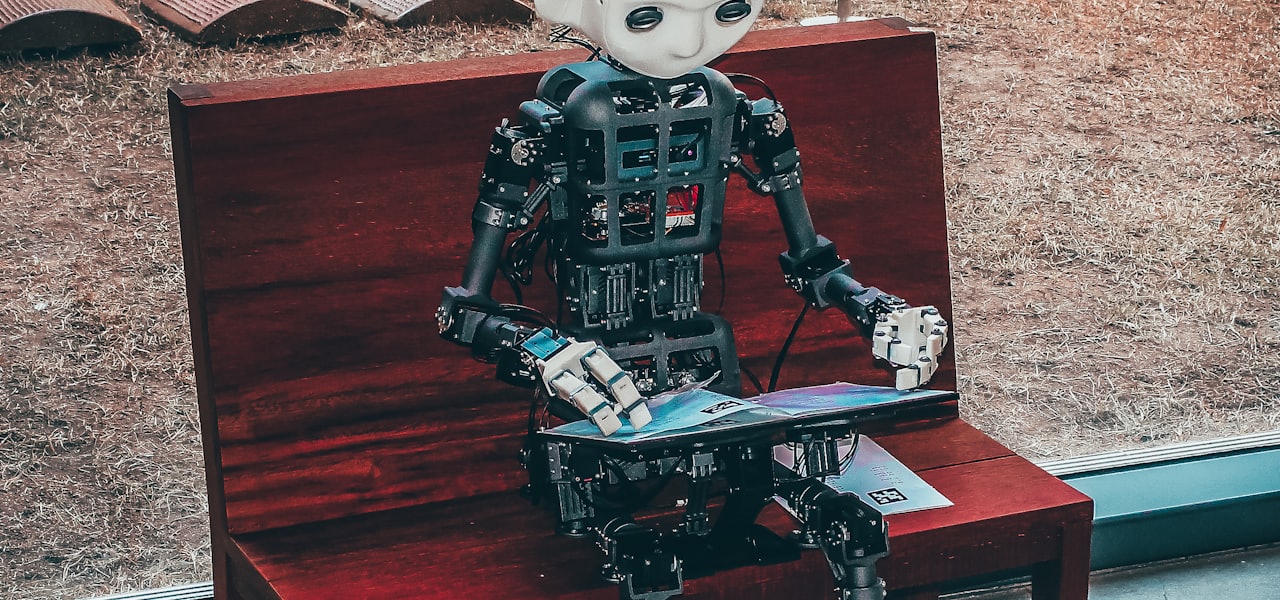
In artificial intelligence, apprenticeship learning (or learning from demonstration or imitation learning) is the process of learning by observing an expert. It can be viewed as a form of supervised learning, where the training dataset consists of task executions by a demonstration teacher. == Mapping function approach == Mapping methods try to mimic the expert by forming a direct mapping either from states to actions, or from states to reward values. For example, in 2002 researchers used such an approach to teach an AIBO robot basic soccer skills. === Inverse reinforcement learning approach === Inverse reinforcement learning (IRL) is the process of deriving a reward function from observed behavior. While ordinary "reinforcement learning" involves using rewards and punishments to learn behavior, in IRL the direction is reversed, and a robot observes a person's behavior to figure out what goal that behavior seems to be trying to achieve. The IRL problem can be defined as: Given 1) measurements of an agent's behaviour over time, in a variety of circumstances; 2) measurements of the sensory inputs to that agent; 3) a model of the physical environment (including the agent's body): Determine the reward function that the agent is optimizing. IRL researcher Stuart J. Russell proposes that IRL might be used to observe humans and attempt to codify their complex "ethical values", in an effort to create "ethical robots" that might someday know "not to cook your cat" without needing to be explicitly told. The scenario can be modeled as a "cooperative inverse reinforcement learning game", where a "person" player and a "robot" player cooperate to secure the person's implicit goals, despite these goals not being explicitly known by either the person nor the robot. In 2017, OpenAI and DeepMind applied deep learning to the cooperative inverse reinforcement learning in simple domains such as Atari games and straightforward robot tasks such as backflips. The human role was limited to answering queries from the robot as to which of two different actions were preferred. The researchers found evidence that the techniques may be economically scalable to modern systems. Apprenticeship via inverse reinforcement learning (AIRP) was developed by in 2004 Pieter Abbeel, Professor in Berkeley's EECS department, and Andrew Ng, Associate Professor in Stanford University's Computer Science Department. AIRP deals with "Markov decision process where we are not explicitly given a reward function, but where instead we can observe an expert demonstrating the task that we want to learn to perform". AIRP has been used to model reward functions of highly dynamic scenarios where there is no obvious reward function intuitively. Take the task of driving for example, there are many different objectives working simultaneously - such as maintaining safe following distance, a good speed, not changing lanes too often, etc. This task, may seem easy at first glance, but a trivial reward function may not converge to the policy wanted. One domain where AIRP has been used extensively is helicopter control. While simple trajectories can be intuitively derived, complicated tasks like aerobatics for shows has been successful. These include aerobatic maneuvers like - in-place flips, in-place rolls, loops, hurricanes and even auto-rotation landings. This work was developed by Pieter Abbeel, Adam Coates, and Andrew Ng - "Autonomous Helicopter Aerobatics through Apprenticeship Learning" === System model approach === System models try to mimic the expert by modeling world dynamics. == Plan approach == The system learns rules to associate preconditions and postconditions with each action. In one 1994 demonstration, a humanoid learns a generalized plan from only two demonstrations of a repetitive ball collection task. == Example == Learning from demonstration is often explained from a perspective that the working Robot-control-system is available and the human-demonstrator is using it. And indeed, if the software works, the Human operator takes the robot-arm, makes a move with it, and the robot will reproduce the action later. For example, he teaches the robot-arm how to put a cup under a coffeemaker and press the start-button. In the replay phase, the robot is imitating this behavior 1:1. But that is not how the system works internally; it is only what the audience can observe. In reality, Learning from demonstration is much more complex. One of the first works on learning by robot apprentices (anthropomorphic robots learning by imitation) was Adrian Stoica's PhD thesis in 1995. In 1997, robotics expert Stefan Schaal was working on the Sarcos robot-arm. The goal was simple: solve the pendulum swingup task. The robot itself can execute a movement, and as a result, the pendulum is moving. The problem is, that it is unclear what actions will result into which movement. It is an Optimal control-problem which can be described with mathematical formulas but is hard to solve. The idea from Schaal was, not to use a Brute-force solver but record the movements of a human-demonstration. The angle of the pendulum is logged over three seconds at the y-axis. This results into a diagram which produces a pattern. In computer animation, the principle is called spline animation. That means, on the x-axis the time is given, for example 0.5 seconds, 1.0 seconds, 1.5 seconds, while on the y-axis is the variable given. In most cases it's the position of an object. In the inverted pendulum it is the angle. The overall task consists of two parts: recording the angle over time and reproducing the recorded motion. The reproducing step is surprisingly simple. As an input we know, in which time step which angle the pendulum must have. Bringing the system to a state is called “Tracking control” or PID control. That means, we have a trajectory over time, and must find control actions to map the system to this trajectory. Other authors call the principle “steering behavior”, because the aim is to bring a robot to a given line.